


 4,9
4,9

 Sunbeds
 Solarium Spare parts
 Infrared cabin parts
 Tanning lamps
 Replacement Patio Heater Lamps
Starters
Maintenance and Replacement
You may need to replace the starter if the lamp doesn't start properly or continues to flicker. It's important to use a starter that's compatible with the type and wattage of your fluorescent lamp.
Sunbed and tanning bed manufacturers recommend replacing starters when changing lamps. Starters are a crucial element in the proper functioning of fluorescent lamps.
Why are good starters important?
When starting quickly, they ensure effective starting of the lamp without overloading.
Consequently, good starters reduce excessive wear and extend the life of the fluorescent lamp.
General information:
A fluorescent lamp, also called a fluorescent lamp, is the lamp used in sunbeds and tanning beds. A key component of a fluorescent lamp is the starter. Here's some information about the operation and role of starters in fluorescent lamps:
What is a starter?
A starter is a small, cylindrical component connected in series with a fluorescent lamp. It plays a crucial role in the lamp's start-up phase. The starter ensures that the lamp receives the correct voltage to ignite and creates the necessary conditions for stable lighting.
How Does a Starter Work?
1. Start-up Phase:
- When you turn on a fluorescent lamp, the electrical voltage sends a current through the heating elements (electrodes) at both ends of the lamp. This heats the electrodes and ionizes the gas inside the lamp.
2. Role of the Starter:
- The starter contains a small tube with a bimetallic strip. When the lamp is turned on, the heat from the current closes the bimetallic strip's contacts, allowing a brief increase in current through the lamp to heat the electrodes.
- After a few seconds, the bimetallic strip cools, opens the contacts, and creates a sudden inductive surge through the ballast, generating a high voltage to start the ionized gas discharge in the lamp.
3. Operational Phase:
- Once the lamp has ignited, current flows through the lamp, disabling the starter. The lamp then burns steadily without the help of the starter.
Types of Starters
There are several types of starters, including:
- Conventional starters: These work as described above with a bimetallic strip, similar to the one used in almost all solar canopies.
- Electronic starters: These are more advanced and provide a shorter start-up time and less lamp flicker.
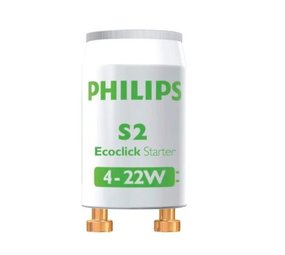
Philips S2 starter. Suitable for all lamps between 4 and 22 watts
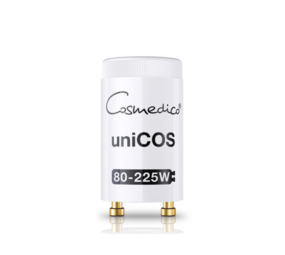
Universal starter for all tanning bed lamps of 80W and up. Ensures a quick start, which extends the lifespan of the lamps.
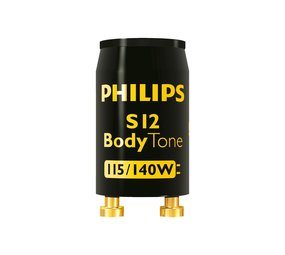
Philips S12 starter for electromagnetic ballasts. Was often used for tanning beds with fluorescent lamps from 80 to 160W. Other variants are currently available for lamps below 115W and above 140W.
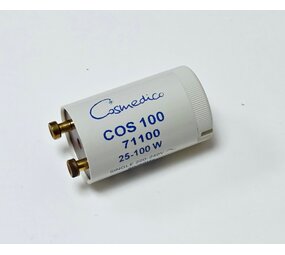
Cosmedico COS 100 starter 25-100W. Suitable for all lamps between 25 and 100 watts. Minimum order quantity 5 pieces
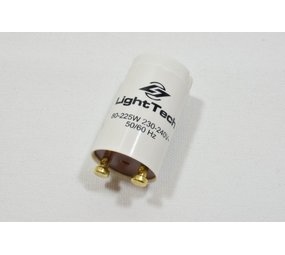
Fluorescent light starter suitable fluorescent lamps with the highest powers. Used by Hapro for 160W, 180W and 200W lamps.

Ignitor for 250-400W HPA gas-discharge lamps used in, among other things, the facial tanners of sunbeds from Hapro and Philips. Manufacturer: Vossloh Schwabe.
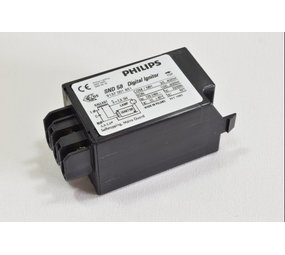
This part is used for Hapro models: Summer Glow HB 404 | Mobile Sun HP 8540

This part is used for Hapro models: Luxura X10

This part is used for Hapro models: Model Luxura 630 | Luxura 730 | Luxura 620 | Luxura 720

This part is used for Hapro models: Luxura X7 | Luxura GT | Luxura X10 | Luxura V10
Overige categorieën in Tanning lamps
Starters
Maintenance and Replacement
You may need to replace the starter if the lamp doesn't start properly or continues to flicker. It's important to use a starter that's compatible with the type and wattage of your fluorescent lamp.
Sunbed and tanning bed manufacturers recommend replacing starters when changing lamps. Starters are a crucial element in the proper functioning of fluorescent lamps.
Why are good starters important?
When starting quickly, they ensure effective starting of the lamp without overloading.
Consequently, good starters reduce excessive wear and extend the life of the fluorescent lamp.
General information:
A fluorescent lamp, also called a fluorescent lamp, is the lamp used in sunbeds and tanning beds. A key component of a fluorescent lamp is the starter. Here's some information about the operation and role of starters in fluorescent lamps:
What is a starter?
A starter is a small, cylindrical component connected in series with a fluorescent lamp. It plays a crucial role in the lamp's start-up phase. The starter ensures that the lamp receives the correct voltage to ignite and creates the necessary conditions for stable lighting.
How Does a Starter Work?
1. Start-up Phase:
- When you turn on a fluorescent lamp, the electrical voltage sends a current through the heating elements (electrodes) at both ends of the lamp. This heats the electrodes and ionizes the gas inside the lamp.
2. Role of the Starter:
- The starter contains a small tube with a bimetallic strip. When the lamp is turned on, the heat from the current closes the bimetallic strip's contacts, allowing a brief increase in current through the lamp to heat the electrodes.
- After a few seconds, the bimetallic strip cools, opens the contacts, and creates a sudden inductive surge through the ballast, generating a high voltage to start the ionized gas discharge in the lamp.
3. Operational Phase:
- Once the lamp has ignited, current flows through the lamp, disabling the starter. The lamp then burns steadily without the help of the starter.
Types of Starters
There are several types of starters, including:
- Conventional starters: These work as described above with a bimetallic strip, similar to the one used in almost all solar canopies.
- Electronic starters: These are more advanced and provide a shorter start-up time and less lamp flicker.


